
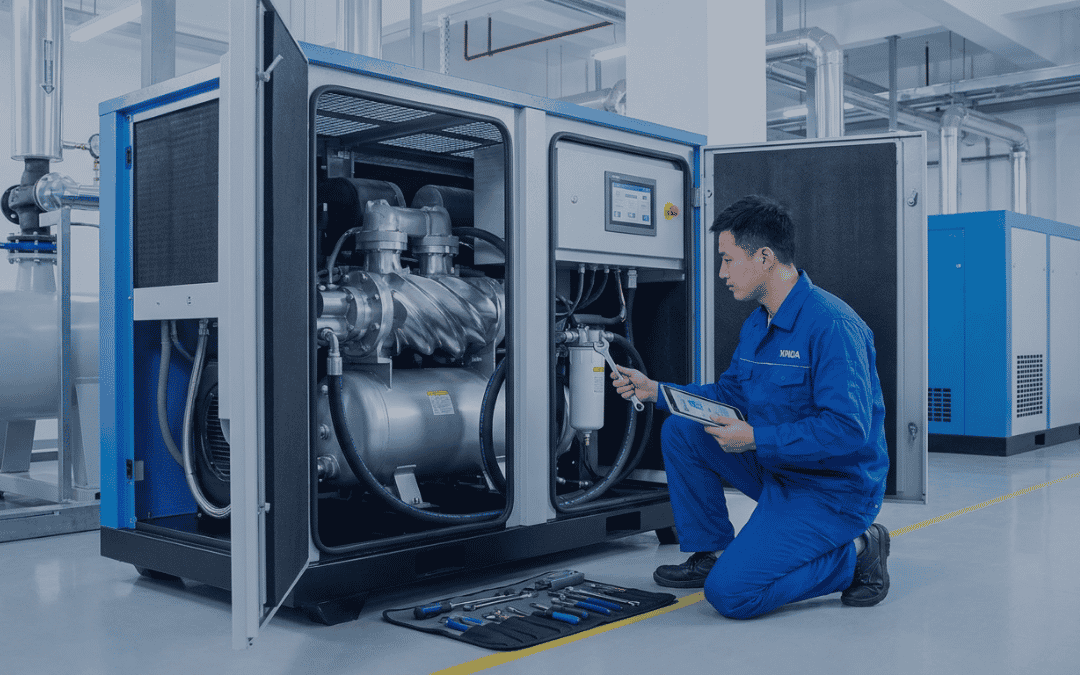
How Preventative Compressor Maintenance Reduces Factory Downtime
Compressed air is often one of the silent utilities operating in the background of a factory—right up until the compressor stops.
Because production equipment, pneumatic tools, actuators, packaging machinery, and automation systems heavily depend on a stable air supply, what begins as a minor compressor issue can quickly escalate into a plant-wide production halt.
For factories that depend on continuous operation, preventative compressor maintenance should never be viewed as just routine servicing. It is a critical component of the plant’s overall reliability strategy, giving maintenance teams the ability to identify developing problems before they result in an unexpected shutdown.
Quick Answer: How Does Preventative Compressor Maintenance Reduce Factory Downtime?
Preventative compressor maintenance stops factory downtime by catching small component failures before they trigger total system shutdowns. It achieves this by detecting early warning signs like rising temperatures or pressure drops, and through the scheduled replacement of wear items like filters, belts, and lubricants to prevent catastrophic mid-production crashes.
How Preventative Maintenance Prevents Outages
Rather than simply asking if the compressor is running today, proactive maintenance focuses on whether the equipment’s operating condition is changing. Taking a strategic approach to servicing prevents outages in four key ways:
- Catches Early Warning Signs: Most compressors do not fail without warning. Regular checks spot rising temperatures, unusual vibrations, or pressure drops that signal a specific part is about to fail. Tracking these conditions provides a valuable performance history for the plant.
- Avoids Sudden Breakdowns: Industrial compressors contain items naturally designed to wear out over time. Replacing wear items like filters, belts, and lubricants on a scheduled timeline stops routine deterioration from turning into catastrophic mid-production crashes.
- Protects Critical Components: Simple maintenance goes a long way in protecting much more expensive equipment. Clean oil and clear intake vents stop dirt, friction, and overheating from ruining expensive air-ends, motors, and pumps. Xinda provides ultrasonic cleaning of oil and after-coolers specifically to improve cooling effectiveness and reduce operating temperatures.
- Controls Operating Rhythms: Factories don’t just need compressed air; they need it delivered at a specific volume and pressure. Serviced units maintain stable pressure, which keeps factory tools and automated assembly lines running accurately without sudden pressure drops or slow response times.
Key Maintenance Tasks for Maximum Uptime
While every industrial compressor should be maintained according to its manufacturer’s operating hours and environmental guidelines, maximizing uptime requires a focus on specific tasks.
1. Filter Replacements
Change air and oil filters regularly to keep contaminants out and prevent airflow restrictions. A heavily contaminated intake filter restricts airflow, forcing the compressor to work harder, while clean filtration directly contributes to better downstream air quality. Xinda supplies and supports vital compressor components including air and oil filters, separators, and bearings.
2. Lubrication Checks
For lubricated compressor systems, oil is essential for cooling and protection. Technicians must regularly grease motor bearings and inspect fluid levels to eliminate metal-on-metal wear and friction. Using the correct compressor lubricant specification for your environment is equally important to prevent fluid deterioration.
3. Belt and Hose Inspection
Belts and hoses are relatively simple components, but their failure can immediately halt operations. Technicians should inspect for wear, cracking, tension, and alignment, tightening or replacing worn belts before they snap during a production shift.
4. Drain Condensate
Compressing atmospheric air naturally produces moisture. Maintenance teams must empty moisture traps daily and inspect drain systems to prevent internal corrosion, valve blockages, and contamination further down the compressed air network.
5. Monitor Cooling Systems and Operating Behaviour
Beyond physical parts, technicians should monitor heat and system behaviour. Dirty coolers or restricted ventilation make it difficult for the compressor to shed heat. Additionally, observing pressure readings, loading periods, and frequent alarms can reveal changes in system performance long before a complete failure occurs.
Planned Maintenance Is Better Than Planned Panic
There is a vital distinction between maintenance downtime and breakdown downtime.
A scheduled service is entirely within your control. Parts can be ordered in advance, technicians can be booked, and production teams can prepare for a temporary interruption. More extensive work can even be scheduled during a planned factory shutdown. Xinda has previously highlighted the value of using planned factory shutdown periods for deeper compressor work, such as air-end refurbishments and electrical maintenance, that are difficult to complete during normal production.
Breakdown maintenance offers none of that control. When a failed compressor stops without warning during peak production, your factory is left at the mercy of technician availability and the severity of the damage.
Maintenance Should Include the Entire Compressed Air System
A common mistake is focusing exclusively on the compressor unit while ignoring the broader network. Poor compressed air performance often originates elsewhere in the system.
To prevent a perfectly serviceable compressor from being forced to overwork and compensate for external issues, maintenance planning should take a system-wide approach. This includes inspecting air dryers, receivers, pipework, valves, system leaks, and points of use. Xinda specifically includes pipework, filtration, site surveys, and system-related support as part of its comprehensive compressed air services.
From Reactive Repairs to a Preventative Strategy
Our previous article, Why Air Compressors Fail: Common Causes of Industrial Downtime, outlined the conditions that cause failures. The next logical step is building a strategy to prevent those conditions from ever developing.
A strong preventative maintenance strategy establishes what needs inspection, the required frequency, components needing planned replacement, and who is responsible. This consistency helps factories transition away from a stressful, reactive maintenance model based entirely on responding to emergencies.
Preventative Compressor Maintenance With Xinda
Xinda Compressed Air Technology provides industrial compressor servicing, repairs, field services, filtration, cooler cleaning, pipework, installations, and total system support.
Major and minor services can be performed on-site, while tailored maintenance plans provide ongoing peace of mind. Xinda also offers three- and five-year maintenance contracts on qualifying units purchased through the company.
By partnering with experts, demanding production environments can build compressor servicing into their schedule rather than waiting for an emergency. And should the unexpected occur, Xinda provides reliable 24-hour compressor breakdown support from its Meyerton operation.
Conclusion
Preventative compressor maintenance does not guarantee a machine will never experience a fault. However, it significantly improves your plant’s ability to address developing problems before they turn into costly production stops.
By actively monitoring early warning signs and regularly inspecting filters, lubrication, belts, and drains, you protect critical equipment and maintain a steady rhythm on the factory floor. For factories where compressed air is essential, the rule is simple: Do not wait for the compressor to stop before giving it attention.
Schedule maintenance around production, rather than letting a breakdown schedule production around your compressor.
Frequently Asked Questions
1. How does preventative compressor maintenance reduce factory downtime?
Preventative maintenance stops factory downtime by catching small component failures before they trigger total system shutdowns. By identifying developing problems like overheating, vibration, and contaminated filters early, component replacements can be planned around production schedules instead of during unexpected breakdowns.
2. What should be checked during preventative air compressor maintenance?
Key maintenance tasks include replacing air and oil filters, greasing motor bearings, inspecting fluid levels, checking belts for cracks, and emptying condensate traps daily. Maintenance should also include monitoring operating temperatures, pressure readings, and compressor alarms.
3. How often should an industrial air compressor be serviced?
Service frequency depends on the compressor type, manufacturer specifications, operating hours, and environmental conditions. Compressors working continuously or in hot, dusty industrial environments require more frequent inspection than lightly used units.
4. What are the early warning signs that a compressor needs maintenance?
Rising temperatures, unusual vibration or noise, falling system pressure, increased oil consumption, frequent alarms, excessive moisture in the lines, and longer loading periods are all indicators that the compressor system requires immediate investigation.
5. Can Xinda maintain industrial compressors without stopping production for long periods?
Yes. Many routine major and minor services can be performed on-site efficiently, while more extensive work can be coordinated with your factory’s planned shutdown periods. Xinda also provides dedicated maintenance plans and 24-hour breakdown support.