
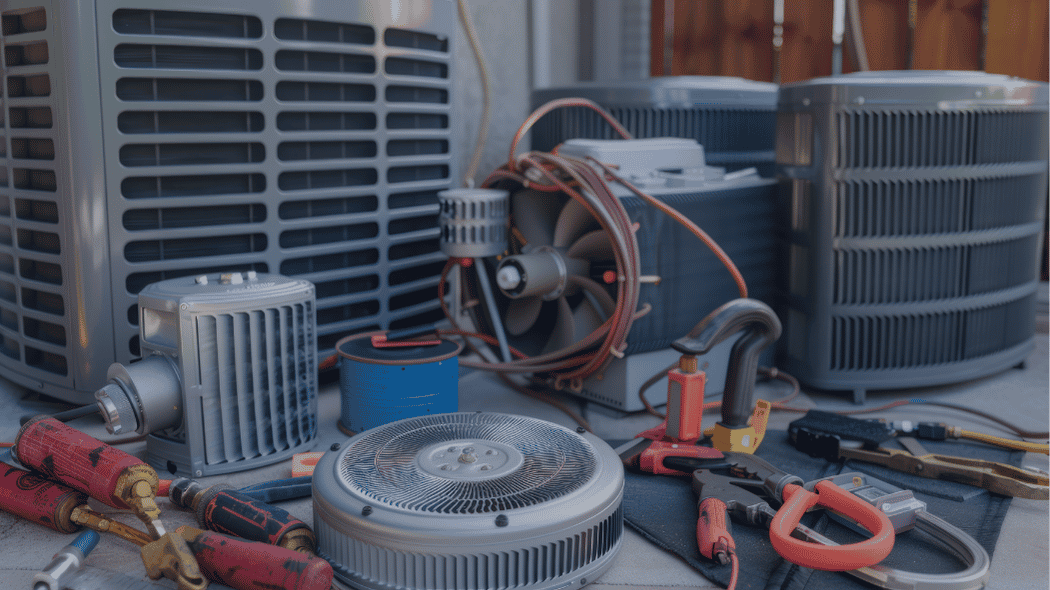
The core air compressor parts every factory should understand
The main compressor components protect three things: airflow, lubrication and mechanical movement. Understanding their individual functions helps maintenance and procurement teams specify the correct spare before a worn component becomes a production problem.
In an oil-injected screw compressor, atmospheric air first passes through an intake air filter. That filter stops dust and abrasive particles from entering the compression stage. Oil then circulates through the compressor to cool, seal and lubricate internal parts. An oil filter removes contamination from that lubricant before it returns to sensitive surfaces.
After compression, air and oil leave the air-end as a mixture. The air/oil separator removes lubricant from the compressed air before discharge. The recovered oil returns to the circuit, while compressed air moves onward through the system.
Quick Answer: What do we refer to when we speak about, Air compressor parts?
Air compressor parts include air filters, oil filters, air/oil separators, compressor oil, V-belts and bearings. Together, they control contamination, protect the air-end, manage heat and lubrication, transfer motor power, and support rotating shafts. When one component wears or fails, compressor efficiency, air quality and mechanical reliability can deteriorate quickly..
On belt-driven machines, V-belts transfer power from the electric motor to the air-end. Bearings support the rotating motor and air-end shafts, maintaining alignment while allowing low-friction rotation.
These air compressor parts therefore perform different jobs, but they work as one protective chain:
- Air filters protect the compressor from airborne contamination.
- Oil filters keep circulating lubricant clean.
- Air/oil separators reduce oil carryover into the compressed air line.
- Compressor oil cools, seals and lubricates the compression system.
- V-belts transmit motor power on belt-driven units.
- Bearings support rotating shafts and maintain controlled movement.
A planner does not need to become a compressor engineer to buy these items correctly. However, the planner should know the machine make, model, serial number, operating environment and required specification. Those details reduce the risk of fitting a part with the wrong dimensions, material, filtration rating or operating characteristics.
Once you understand these components, see how they fit into a structured industrial compressor service plan. That companion guide covers service timing and planned replacement rather than repeating component explanations here.
Filtration air compressor parts: air filters and oil filters
Filtration components keep unwanted particles out of the air stream and lubricant circuit. They must capture contamination while allowing sufficient flow for the compressor to operate correctly.
Air filters: protecting the compressor intake
An air filter cleans atmospheric air before it enters the compressor air-end. It traps dust, fibres and other airborne particles that could enter the compression chamber.
As the filter loads with dust, resistance across the element rises. The compressor then draws air through a more restrictive path, which can reduce available airflow and increase inlet restriction.
Common warning signs include:
- Visibly dirty or heavily loaded filter media;
- Reduced compressor output;
- Inlet restriction warning, where fitted;
- Unusual intake noise;
- Short filter life in dusty environments.
A damaged filter creates a different risk. Torn media, poor sealing or incorrect fitment can allow abrasive contamination to bypass filtration and reach the air-end.
South African factories should pay close attention to operating environment. Mining-adjacent plants, cement facilities, agricultural sites and dusty workshops can load intake filters much faster than hour-based assumptions suggest. Procurement teams should therefore budget around actual site conditions, not only a generic replacement cycle.
Oil filters: protecting the lubricant circuit and air-end
An oil filter removes particles and degradation products from circulating compressor lubricant. It protects bearings, internal oil passages and the air-end from contaminated oil.
Lubricant repeatedly passes through heat and pressure cycles and can collect fine wear particles, oxidation products and contamination introduced during servicing. The filter captures this material before the oil returns to critical surfaces.
If the element becomes restricted, oil flow can suffer. Some compressors use bypass arrangements to protect oil supply during abnormal restriction, but bypass operation can allow less-filtered oil to circulate and should not become normal operation.
Signs that an oil filter needs attention include:
- High differential pressure or a filter warning;
- Rising operating temperature;
- Visibly contaminated oil;
- Abnormal lubricant pressure behaviour;
- Debris found during inspection.
Neglect can increase air-end friction and bearing wear. Incorrect filters can also introduce sealing, flow or fitment problems. For exact replacement timing, use the manufacturer’s guidance and Xinda’s service-plan article rather than a universal hour figure.
Lubrication air compressor parts: separators and compressor oil
Lubrication components control the oil that protects an oil-injected screw compressor and keep that oil from travelling downstream. The separator and lubricant influence both compressor protection and delivered air quality.
Air/oil separators: controlling oil carryover
An air/oil separator removes lubricant from compressed air before the air leaves an oil-injected screw compressor. Without effective separation, oil aerosol and droplets can pass into downstream pipework and equipment.
During compression, oil is injected into the air-end. The air-oil mixture then enters a separator vessel, where flow changes remove much of the oil. Remaining fine aerosol passes through a separator element, where droplets coalesce and return to the oil circuit.
The Compressed Air & Gas Institute (CAGI) rotary compressor guidance explains that injected oil lubricates the compression system and bearings, removes compression heat and helps seal internal clearances. It also confirms that the air-oil mixture passes to a sump/separator before compressed air enters the system.
A healthy separator must remove oil without creating excessive restriction. As the element becomes contaminated, differential pressure can rise. If it is damaged, incorrectly fitted or no longer separating effectively, oil carryover can increase.
Typical warning signs include:
- Increased oil consumption without an obvious external leak;
- Visible oil downstream;
- Oily condensate beyond normal expectations;
- Higher separator differential pressure;
- Pressure loss across the separator.
A low-cost separator that does not match the compressor specification can be a false economy. Oil can spread into downstream piping, filters, dryers, valves and processes that depend on cleaner air.
For plants with defined air-purity requirements, ISO 8573-1 compressed-air purity classes provide the recognised framework for contaminants including particles, water and oil.
Compressor oils and lubricants: cooling, sealing and lubrication
Compressor oil is a functional fluid that cools, seals and lubricates an oil-injected screw compressor. It is not interchangeable with general-purpose industrial oil simply because the viscosity appears similar.
Inside the air-end, lubricant removes compression heat, forms a sealing film around internal clearances and protects bearings and moving surfaces from friction and wear.
The correct specification matters because compressor lubricants must handle temperature, oxidation, material compatibility and machine operating conditions. CAGI guidance notes that lubricant selection should consider compressor seals, gaskets, ambient conditions and application requirements.
Incorrect or degraded oil can cause:
- Poor heat removal and higher operating temperature;
- Varnish or deposits;
- Accelerated oxidation;
- Reduced sealing performance;
- Air-end friction and bearing wear;
- Incompatibility with seals or other materials.
Moisture contamination also matters. Milky oil, unusual colour, strong odour or rapid viscosity change deserves investigation rather than a simple top-up.
Never mix oils unless compatibility is confirmed. Procurement should match the compressor model, lubricant specification and existing oil type before ordering.
Mechanical drive air compressor parts: V-belts and bearings
Mechanical drive components transfer torque and keep rotating assemblies supported. On belt-driven compressors, V-belts and bearings can stop production as abruptly as a blocked filter or failed separator.
V-belts: transferring motor power to the air-end
A V-belt transfers rotational power from the motor pulley to the air-end pulley on belt-driven compressors. Correct tension and alignment let the belt transmit torque without excessive slip or side loading.
A loose belt can slip, generate heat and reduce power transfer. An over-tensioned belt can overload shafts and bearings. Misaligned pulleys also increase edge wear and shorten belt life.
Common signs of deterioration include:
- Cracking;
- Glazing or a shiny contact face;
- Frayed edges;
- Black rubber dust;
- Squealing or chirping;
- Visible slack;
- Reduced compressor output;
- Repeated tension loss.
Belt condition is easy to overlook because filters are more obvious consumables. Yet a snapped belt can stop a belt-driven compressor immediately. Visual condition, pulley alignment and correct tension therefore deserve the same disciplined attention as filtration components.
Replacement should follow condition and manufacturer requirements. Where multiple matched belts operate together, follow the OEM instruction on replacing a complete set rather than mixing worn and new belts.
Bearings: supporting motors and air-ends
Bearings support rotating shafts while allowing controlled, low-friction movement. In a compressor, bearings are critical to both the electric motor and the air-end.
Motor bearings keep the rotor correctly positioned. Air-end bearings maintain alignment and loading of the compression rotors. Changes in bearing condition can therefore affect vibration, temperature, noise and shaft stability.
Lubrication requirements vary by design. Some motor bearings require greasing, while compressor air-end bearings may rely on circulating lubricant. Follow the OEM procedure for lubricant type, quantity and method; over-greasing can be as problematic as insufficient lubrication.
Warning signs include:
- Increasing vibration;
- Rumbling, growling or high-pitched noise;
- Rising bearing or motor temperature;
- Grease leakage or contamination;
- Abnormal shaft movement;
- Metallic debris during inspection.
Bearing neglect can progress from a manageable replacement to severe motor or air-end damage. A failing bearing can damage shafts, housings or rotor clearances and may ultimately require a motor rebuild or air-end overhaul.
Air Compressor Parts at a Glance
This table summarises the six core components, their primary role and the failure signs that maintenance and procurement teams should recognise.
| Part | Primary function | Sign of wear or failure | Typical consequence if neglected |
|---|---|---|---|
| Air filter | Removes airborne contamination before air enters the air-end | Dirty media, inlet restriction, reduced airflow | Restricted intake, reduced output, contamination reaching the air-end |
| Oil filter | Removes contamination from circulating lubricant | High differential pressure, dirty oil, temperature rise | Increased wear, restricted oil flow, air-end or bearing damage |
| Air/oil separator | Removes lubricant from compressed air after compression | High oil consumption, oil carryover, increased differential pressure | Oily downstream air, pressure loss, contaminated filters and equipment |
| Compressor oil | Cools, seals and lubricates internal compressor components | Darkened or degraded oil, overheating, deposits, abnormal odour | Poor cooling, friction, varnish, seal issues and accelerated wear |
| V-belt | Transfers motor power to the air-end | Cracks, glazing, dust, squeal, slack or frayed edges | Slippage, loss of output or sudden compressor stoppage |
| Bearings | Support rotating motor and air-end shafts | Noise, vibration, heat or shaft movement | Motor damage, air-end damage or catastrophic rotating-equipment failure |
What happens when air compressor parts are neglected
Neglected compressor components usually create restriction, contamination, overheating or mechanical damage. The exact symptom depends on which component has deteriorated.
A blocked air filter restricts intake. A restricted oil filter compromises lubricant cleanliness or flow. A damaged separator increases oil carryover. Degraded oil reduces protection and cooling. A slipping V-belt reduces torque transfer. A failing bearing increases vibration and can damage rotating assemblies.
These failure modes can interact. For example, degraded oil can raise temperature and accelerate bearing distress. A poorly separating element can increase downstream oil contamination, which then burdens air-treatment equipment.
This article intentionally stays at component level. For broader shutdown causes, see Why Air Compressors Fail. For the strategy behind planned intervention, read Xinda’s preventative compressor maintenance guide.
Sourcing genuine air compressor parts in South Africa
Correct parts sourcing means matching the component to the compressor, operating conditions and warranty requirements. Price matters, but specification, availability, fit and technical support matter more when production depends on the machine.
Xinda supplies and supports vital compressor components including air and oil filters, separators, oils, V-belts and bearings. The company’s compressor parts and related equipment page provides the commercial sourcing route for these items. Xinda’s existing product information confirms its range includes filters, separators, oils, V-belts and bearings.
For buyers in Meyerton, Vereeniging, Vanderbijlpark, Sasolburg and surrounding industrial areas, Xinda also has a dedicated air compressor parts supplier page for the Vaal Triangle. The page covers genuine and quality-equivalent spares for major compressor types.
When requesting a quote, provide:
- Compressor make and model;
- Serial number;
- Existing part number, where available;
- Photographs of the old component and data plate;
- Operating environment;
- Any known warranty or OEM requirements.
In 2026, a practical procurement approach is to compare approved genuine parts and high-quality OEM-equivalent spares against warranty terms, fit and operating risk rather than selecting on price alone. Incorrect components can create restricted airflow, oil carryover, sealing problems or air-end friction. Depending on manufacturer terms, unapproved parts may also jeopardise warranty coverage.
If you need help identifying or sourcing the correct component, contact Xinda with the machine details so the part can be matched before installation.
8. Air Compressor Parts at a Glance — Comparison Table
The table above is the required on-page scorecard and should remain in the published article.
| Part | Primary function | Sign of wear or failure | Typical consequence if neglected |
|---|---|---|---|
| Air filter | Removes intake contamination | Dirty element, restriction, reduced flow | Reduced output and air-end contamination |
| Oil filter | Keeps circulating oil clean | Differential pressure, dirty oil, temperature rise | Air-end and bearing wear |
| Air/oil separator | Removes lubricant from discharged air | Oil carryover, higher oil use, pressure drop | Downstream contamination |
| Compressor oil | Cools, seals and lubricates | Degradation, deposits, overheating | Friction and internal wear |
| V-belt | Transfers motor power | Cracks, glazing, slippage, fraying | Reduced output or sudden stoppage |
| Bearings | Support rotating shafts | Noise, vibration, temperature increase | Motor or air-end damage |
Frequently Asked Questions
1. What are the most important air compressor parts to maintain?
Air filters, oil filters, separators, compressor oil, V-belts and bearings are among the core wear and protection components. Their exact needs depend on compressor design, operating hours, environment and manufacturer instructions.
2. What does an air/oil separator do?
An air/oil separator removes oil aerosol and droplets from compressed air after the oil-injected screw compression stage. A worn or damaged separator can increase oil carryover and contaminate downstream equipment.
3. How often should compressor V-belts be replaced?
V-belts should be replaced according to manufacturer guidance and actual condition, not a universal interval. Cracking, glazing, fraying, repeated tension loss, slippage or alignment-related wear are reasons for inspection and replacement.
4. What happens if you use the wrong compressor oil?
The wrong oil can reduce cooling, lubrication and sealing performance or react poorly with seals and existing lubricant. It may also contribute to deposits, overheating and accelerated internal wear.
5. Where can I source genuine air compressor parts in South Africa?
Xinda Compressed Air Technology supplies filters, separators, oils, V-belts, bearings and related compressor spares from Gauteng for industrial customers. Provide the make, model, serial number and part number where possible so the correct component can be matched.